
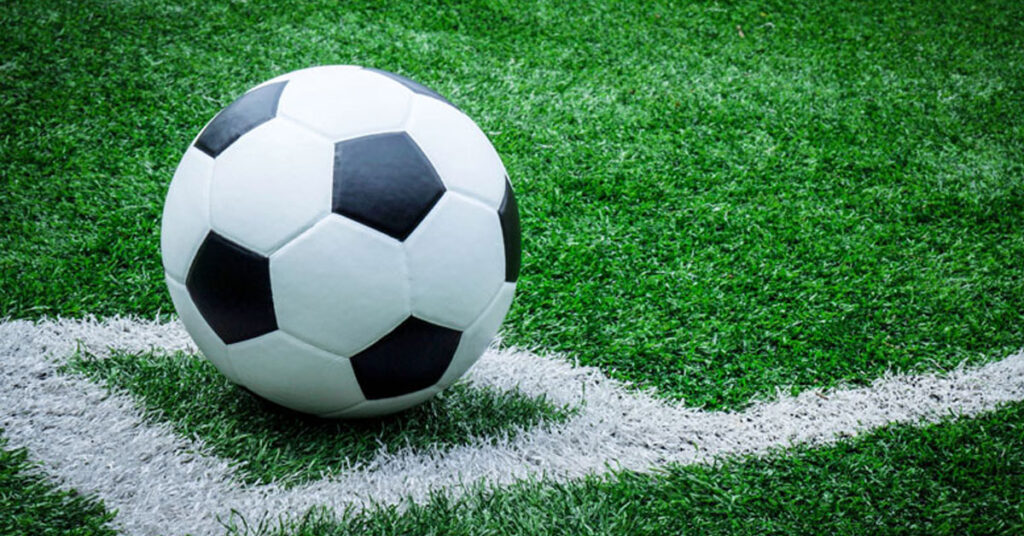
Soccer ball size by age follows your child’s league age group. US Youth Soccer’s playing rules put U8 and younger on a size 3 ball, U9 through U12 on a size 4, and U13 and older on a size 5. Buy the size your child’s team uses so backyard touches feel like game day. Mini size 1 and 2 balls fall outside those rules and suit toddlers and skill drills.
Key Takeaways
- Size 3 (23 to 24 inches around, 11 to 12 ounces) is the ball for U8 and younger.
- Size 4 (25 to 26 inches, 11 to 13 ounces) covers U9 through U12.
- Size 5 (27 to 28 inches, 14 to 16 ounces) starts at U13 and is the adult ball.
- Age groups follow birth year, so your child’s U label can run up to two years above their current age. Shop by the label.
- On a hard court, use a futsal ball. It bounces less than a regular soccer ball.
Soccer Ball Size by Age Chart
US Youth Soccer lists the ball size, circumference and weight for each age group in Rule 303 of its Policy on Players and Playing Rules. The chart below uses those numbers.
| Age group | Ball | Circumference | Weight |
|---|---|---|---|
| U8 and younger | Size 3 | 23 to 24 in | 11 to 12 oz |
| U9 to U12 | Size 4 | 25 to 26 in | 11 to 13 oz |
| U13 to adult | Size 5 | 27 to 28 in | 14 to 16 oz |
| Toddlers and drills | Size 1 or 2 | No league standard | Varies by brand |
The “U” means that age and younger. US Youth Soccer’s age matrix reads U8 as “8 and younger,” and it sets each group by birth year and the year the season ends.
For a season that ends in 2027, a child born in 2018 plays U9, even if they are still 7 when fall practice starts. Go by the group on your child’s registration, because the league sets one ball size for the whole group.
What Size Soccer Ball Does My Child Need?
Size 3: U8 and Younger
This is the first league ball. US Youth Soccer uses it for both its 6 and under and 8 and under groups, so your child keeps the same size for the first few years of league play.
Games are short at this level: four 6-minute quarters for U6 and four 12-minute quarters for U8. Touches at home with a size 3 add to that short game time.
Size 4: U9 Through U12
Players in U9 through U12 move to a size 4. It is about 2 inches bigger around than a size 3, while the weights overlap.
Keep home practice on the size 4, even if an older sibling kicks a size 5 around the yard. A ball that matches game day keeps first touch and passing weight consistent.
Size 5: U13 and Older
From U13 on, every player uses the full-size ball. Law 2 of the IFAB Laws of the Game sets it at 27 to 28 inches around and 14 to 16 ounces, with pressure between 8.5 and 15.6 psi at sea level.
This is the adult size, so there is no bigger ball to move up to.
Size 1 and Size 2: Mini Balls
Neither US Youth Soccer’s rules nor the Laws of the Game set a standard for size 1 or size 2, so measurements vary by brand. Read the printed circumference before you buy.
A mini ball is a good first ball for a toddler learning to kick, and older players can use one for juggling and dribbling drills. When your child joins a league team, switch to the size 3.
Size 3 vs Size 4: When Should Your Child Move Up?
Move up when the league does. Your child’s age group decides the ball, not height or skill.
For most families, the change comes at U9, the first season after U8. Watch the birthday math, though. An 8 year old can play U8, U9 or U10 depending on birth year and the time of season, and only U8 uses a size 3.
US Youth Soccer also lets its state associations adjust these rules, so ask your club if a U9 team still plays with a size 3. Buy the new ball before the season, so the adjustment happens in the backyard instead of during games.
Futsal and Indoor Soccer Ball Sizes
Futsal is a small-court game with its own rulebook and its own ball. FIFA’s Futsal Laws of the Game set the match ball at about 24.4 to 25.2 inches (62 to 64 cm) around and about 14 to 15.5 ounces (400 to 440 g).
The bigger difference is bounce. Dropped from about 6.5 feet (2 m), a futsal ball must rebound only about 20 to 26 inches (50 to 65 cm) on the first bounce, which keeps it low on a hard floor.
For youth play, US Youth Futsal’s championship rules call for a size 3 futsal ball at U12 and younger and a size 4 at U13 and older.
If your child practices on a backyard sport court or a driveway, a futsal ball in the right size is a smart pick, since it is made for hard, smooth floors. If your child plays indoor soccer on turf instead, ask the league which ball it uses.
How to Pick the Best Youth Soccer Ball
The best youth soccer ball is the right size first and suited to your playing surface second. Use this checklist before you buy.
- Match the age group. Use the chart above and confirm with the coach.
- Check the listed weight. It should fall inside the chart’s range for that size.
- Look for a FIFA quality mark if you want a tested match ball. FIFA’s Quality Programme awards three marks: FIFA Quality Pro, FIFA Quality and FIFA Basic. Only balls that pass FIFA’s testing get one.
- Pick for the surface. Use a standard ball on grass or turf and a futsal ball on hard courts.
- Inflate to the printed range. The Laws of the Game allow 8.5 to 15.6 psi for a size 5 match ball. Smaller balls list their own range, so follow the maker’s number and use a pump with a gauge.
Backyard Practice Tips That Fit Each Age
Play Small Games
US Youth Soccer’s Game Format Project shifts U5 and U6 recreation teams to 2v2 or 3v3 games on smaller fields. It cites research from the US and Europe showing those formats give kids more touches than 4v4 or 5v5. A backyard fits that kind of game well.
Playing outside has benefits beyond soccer skills. Read our guides on why kids should play sports outside and the advantages kids get from backyard sports.
Skip Headers for Younger Kids
US Youth Soccer’s heading rule bars players 10 and under from heading the ball in matches or practicing it in organized team settings. Players 11 and 12 may head in games, but each should head the ball no more than 25 times a week, regardless of setting.
The rule is mandatory at US Youth Soccer events, and state associations are strongly encouraged to adopt it. Count backyard headers toward that weekly limit.
Secure the Goal
Safety: The CPSC guidelines for movable soccer goals say to anchor or counterweight goals at all times and never let anyone climb the net or frame. Most incidents CPSC investigated happened when goals were unattended, not during a match.
Planning a dedicated practice space? Start with our turf vs grass comparison, then see the sports turf and multi-sport courts we build.
Frequently Asked Questions About Soccer Ball Size by Age
What size soccer ball does a 5 year old need?
A 5 year old needs a size 3. Depending on birth year and the time of season, a 5 year old plays U5, U6 or U7, and US Youth Soccer uses a size 3 for every group through U8. It measures 23 to 24 inches around and weighs 11 to 12 ounces. For a 3 or 4 year old who is not on a team yet, a mini ball works for first kicks.
What size soccer ball is right for a 10 year old?
Size 4. A 10 year old plays U10, U11 or U12 depending on birth year and the time of season, and US Youth Soccer uses a size 4 for all three. It is 25 to 26 inches around and weighs 11 to 13 ounces. Use the same size at home, since a sibling’s heavier size 5 can throw off passing on game day.
How big is a size 2 soccer ball?
There is no official size 2 standard. US Youth Soccer’s rules start at size 3, and the Laws of the Game only define the full-size ball. A size 2 is a mini ball, smaller than a league size 3, and its exact measurements vary by brand, so check the label. It suits toddlers and skill drills, not league games.
What size ball is used for futsal and indoor soccer?
Futsal uses its own low-bounce ball. Under FIFA’s Futsal Laws, the match ball measures about 24.4 to 25.2 inches (62 to 64 cm) around. US Youth Futsal’s championship rules use a size 3 futsal ball for U12 and younger and a size 4 for U13 and older. For indoor soccer on turf, ask the league which ball it uses.
When should my child switch to a size 5 ball?
Switch at U13, the age group where US Youth Soccer moves every team to the full-size ball. The change is bigger than it looks, since a size 5 weighs 14 to 16 ounces against 11 to 13 for a size 4. Buy the new ball before the season so your child gets a few weeks of backyard touches with the extra weight.
Give Your Young Player a Place to Practice
The right ball needs room to roll. My Backyard Sports designs and builds sports turf areas and multi-sport courts for your yard, from the first site measurement to the final line paint.