
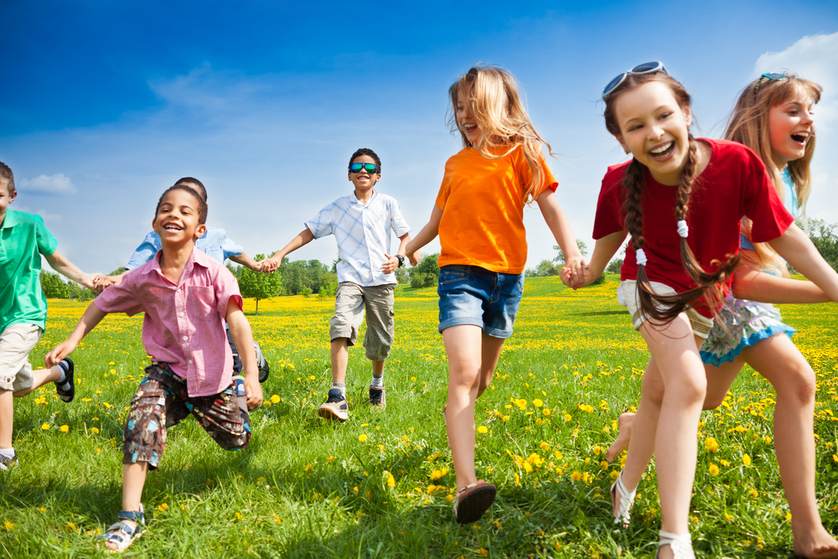
The biggest benefits of backyard sports for kids come from easy access. When a hoop, net or court sits outside the back door, children get more practice and play where you can see them. They also build confidence through small wins, spend time with family and bring friends over for pickup games. None of it needs a schedule, a drive or a sign-up form.
Key Takeaways
- USA Basketball recommends one team practice a week for ages 7 and 8, and two for ages 9 to 11. A home hoop is where the extra reps happen.
- Lack of access to play spaces is a common barrier to youth sports, according to the federal National Youth Sports Strategy. A court at home removes it.
- Right-sized gear means more made shots. USA Basketball recommends an 8 foot basket for ages 7 and 8, and 9 feet for ages 9 to 11.
- Pickup games where kids choose teams and set the rules help them practice negotiation and conflict resolution.
- A multi-sport court with lines for several games keeps up as your kids grow.
Why a Place to Play at Home Matters
The CDC physical activity guidelines for children call for 60 minutes or more of moderate to vigorous activity each day for ages 6 to 17. On at least 3 days a week, that should include vigorous play, plus muscle and bone builders like climbing, jumping and running.
Most teens fall short. The federal National Youth Sports Strategy reports that only 20 percent of adolescents meet those guidelines. It names lack of access to play spaces, cost, and time as common barriers to youth sports.
Organized sports cost real money, too. The same report says close to 60 percent of parents spend $250 to $2,500 a year on sports programs. A court at home does not replace the team. It fills the hours between practices, with no fee per visit and no car ride.
That gap is where the benefits of backyard sports for kids show up. For the broader health case for outdoor play, read our guide on why kids should play sports outside.
5 Benefits of Backyard Sports for Kids
1. More Practice Reps, Less Driving
Skills come from repetition, and recommended team practice time for young players is short. USA Basketball’s youth guidelines call for one 30 to 60 minute practice a week for ages 7 and 8. For ages 9 to 11, they recommend two practices of 45 to 75 minutes.
A hoop in the driveway turns spare minutes into shots, dribbles and serves. Ten minutes before dinner, five nights a week, adds 50 minutes of ball time on top of team practice.
The USA Basketball youth basketball guidelines also call for informal, peer-led play alongside structured practice. It gives kids freedom to create and challenge themselves, and a home court is where it happens.
2. A Safe, Supervised Space
A court at home puts play in view of the kitchen window or the patio. You know the surface, the equipment and every kid on it.
Safety still takes planning. Pick a smooth, level surface, pad the hoop pole, and keep the play area clear of rocks, fence posts and garden edging.
Anchor anything that can tip. The CPSC movable soccer goal guidelines say goals must always be anchored. They warn about kids who climb on goals or hang from the crossbar. Most incidents the agency investigated happened when goals were unattended, not during games.
3. Confidence From Small Wins
Kids keep playing when they feel capable. The National Youth Sports Strategy notes that even feeling physically unskilled is an important reason kids drop out. It also lists fun as one of the top reasons they play.
Home practice lets a child miss in private and improve at their own pace. Right-sized equipment speeds that up. USA Basketball says a lower basket helps young players develop proper shooting form and raises their chance of making shots.
4. Family Time on Your Schedule
With a court in the yard, a 15 minute game after work is easy. The National Youth Sports Strategy calls playing sports together a great way for adults to model an active life. It adds that kids benefit from seeing their parents have fun playing.
Keep it light. The report also warns that parental pressure and over-involvement can lead to anxiety and burnout in young athletes. Let the kids pick the game some nights. For the parent side, read our piece on lessons parents learn playing sports with their children.
5. Friends Come to Your House
Not having other kids to play with can keep a child out of sports, the federal strategy notes. A court gives the neighborhood a reason to knock on your door.
Pickup games carry their own lessons. According to the same report, unstructured games where kids choose teams and make the rules help them build negotiation and conflict resolution skills. For younger groups, a backyard gaga ball pit works the same way, with one ball and no set teams.
Tip: Mix the sports. USA Basketball recommends playing a variety of sports and discourages specializing in basketball before age 14. A court with lines for two or three games makes variety the default.
What to Put in a Kids Sports Yard at Every Age
The best setup fits your kids today and adjusts as they grow. Use this table as a starting point for your home sport court.
| Age | What to set up | Guideline behind it |
|---|---|---|
| 3 to 6 | Open, flat run space, soft balls, a low adjustable hoop | CDC: active all day at 3 to 5, 60 minutes daily from 6 |
| 7 to 8 | Hoop at 8 feet, size 5 ball (27.5 inch), volleyball net at 5 to 6 feet | USA Basketball; USA Volleyball, younger players |
| 9 to 11 | Hoop at 9 feet, size 6 ball (28.5 inch), volleyball net up to 7 feet | USA Basketball; USA Volleyball, 12 and under |
| 12 and up | Regulation 10 foot rim, size 6 (girls) or size 7 (boys) ball | USA Basketball, 12 through high school |
USA Basketball sets the free throw line at 14 feet for ages 7 to 11. Paint a line there so young shooters can reach the rim with good form. USA Volleyball’s youth rules say net height can vary, so treat the net heights as a starting point.
Sports You Can Play in Your Backyard
- Basketball. A half court with an adjustable hoop that moves from 8 to 10 feet as kids grow.
- Pickleball. The 2026 USA Pickleball rulebook sets the court at 20 by 44 feet, with a minimum playing surface of 30 by 60 feet.
- Volleyball. Sand or grass, with a net you can raise each season.
- Hockey. Roller hockey on sport tiles in summer, or a backyard ice rink in winter.
- Soccer and futsal. Small, anchored goals on turf or a tile court, plus the right soccer ball size for each age.
- Quiet games. Bocce, shuffleboard and a putting green are backyard games kids and adults can play together.
Two or three of these can share one surface, each with its own painted lines. Our residential court builds start with a layout sized to your yard and your kids’ sports.
Planning Checklist
- Pick a spot you can see from the house.
- Measure the open area, including room to run past the lines.
- Choose a level surface that drains after rain.
- Pick a hoop that adjusts. Our guide to the pros and cons of basketball hoop types compares the options.
- Plan lines for every sport your kids play now, plus one they want to try.
- Anchor goals and pad poles before the first game.
Frequently Asked Questions About Backyard Sports for Kids
How much space does a backyard court for kids need?
It depends on the games you want. A pickleball court is 20 by 44 feet, and USA Pickleball calls for a playing surface of at least 30 by 60 feet. A hoop for kids ages 7 to 11 needs room for a free throw line 14 feet from the basket, plus space to chase rebounds. Our team measures your yard and recommends a layout that fits it.
What sports can kids play in the backyard?
Basketball, pickleball, volleyball, roller hockey, soccer and futsal all work on a home court, and bocce or a putting green suit quieter afternoons. A multi-sport court painted with two or three sets of lines lets kids switch games whenever they get bored with one.
What height should a kids basketball hoop be?
USA Basketball’s youth guidelines set the basket at 8 feet for ages 7 and 8, and at 9 feet for ages 9 to 11. From age 12, kids play on a regulation 10 foot rim. A lower basket helps children learn proper shooting form and make more shots. That makes an adjustable hoop the smart pick for a growing family.
Is a backyard court worth it if my kids already play on a team?
For many families, yes. Recommended team practice is limited: USA Basketball suggests one or two practices a week for ages 7 to 11. A home court adds informal play between sessions, which the same guidelines encourage. Keep it fun, rotate sports, and give kids rest days from organized play so the court stays a place they want to be.
What are the benefits of putting kids in sports?
The National Youth Sports Strategy lists better bone health, fitness, heart and metabolic health, thinking skills and a lower risk of depression for active youth. Sports add benefits of their own, including confidence, self-esteem, teamwork and leadership. Studies it reviews also connect sports and other activities with higher grades and fewer discipline problems at school.
Build a Backyard Court Sized for Your Kids
My Backyard Sports is a family run company that designs and builds home courts in New Jersey, New York, Connecticut, Austin and Houston. We measure your yard, recommend a layout for your kids’ ages and sports, and our own crews handle the base, surfacing, hoops and line painting.