
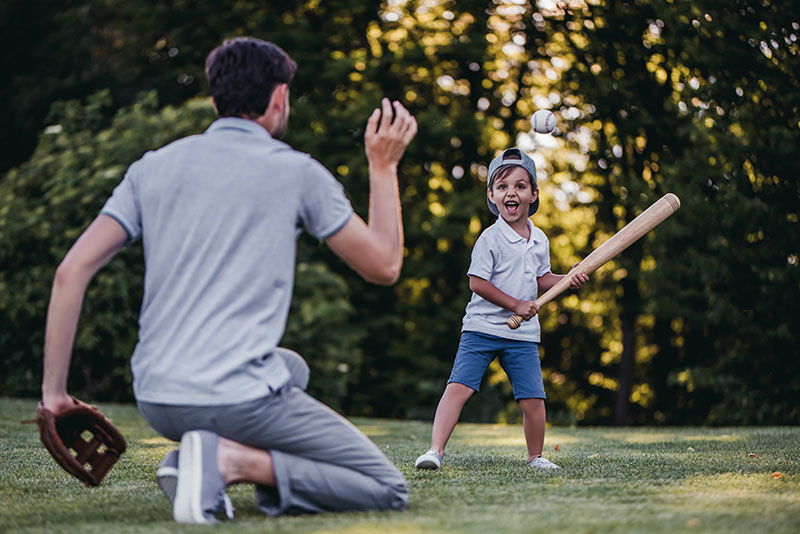
Playing sports with your kids teaches parents five lessons: patience, letting the child lead, handling wins and losses with grace, praising effort and listening, and living the active habits you hope they copy. Keep the games short, simple and fun, and your children are more likely to keep asking you to play.
Key Takeaways
- Fun keeps kids playing. In one study, young soccer players, parents and coaches rated trying hard and being a good sport above winning as sources of fun.
- Praise the work, not the talent. In classic 1998 research, kids praised for effort kept trying longer after a failure.
- Your reaction to a loss teaches more than any speech about sportsmanship.
- Match the game to the age: running, throwing and catching for preschoolers, then smaller balls and simple rules in the early grades.
- Kids who see their parents enjoy being active are more likely to stay active themselves.
What Playing Sports With Your Kids Teaches You
Most parents walk onto the driveway planning to teach. A few games later, the lessons flow the other way. In a 2015 study in the Journal of Physical Activity and Health, researchers had 142 youth soccer players, 57 parents and 37 coaches rate 81 things that make sports fun.
The top three themes were being a good sport, trying hard and positive coaching. Winning made the list, but it ranked only 48th of the 81. That finding shapes every lesson below.
Fun also affects how long kids stay in the game. A 2019 survey by the Aspen Institute’s Project Play and Utah State University found the average child spends less than three years playing a sport and quits by age 11. Relaxed games at home help keep sport fun.
Lesson 1: Patience Matters More Than Perfect Form
Your seven year old will travel, double dribble and shoot with both elbows flying out. Correct it all at once and the game ends early.
The American Academy of Pediatrics (AAP) says sports for kids ages 6 to 9 should focus on learning new skills rather than winning, with flexible rules. For kids under 6, it advises short, show and tell instruction mixed with playtime. Show a skill once, let them try it, then go back to playing.
What patience looks like on the court
- Fix one thing per session. Pick the habit that matters most today and let the rest slide.
- Count tries, not makes. Ten attempts at a new shot is progress, even if nothing drops.
- Shrink the game. For ages 6 to 9, the AAP recommends smaller balls, shorter games and less focus on the score. Those rules work in the backyard too.
Lesson 2: Let Your Child Lead the Game
A game your child picked is a game they own. Ask what they want to play, then play it their way, even if the rules change halfway through.
The CDC’s activity guidelines for kids point the same way: encourage children to do activities they enjoy.
Leading also means you step back. Let them invent a trick shot contest, choose the winning score or pick teams when cousins visit. You are a teammate out there, not the head coach.
Signs you have taken over
- You give more instructions than high fives.
- Your child looks over at you after every shot, waiting for a grade.
- They have stopped asking you to play.
Lesson 3: How You Win and Lose Is the Real Lesson
Your child notices how you react to a missed shot or a lost game. If you sulk or argue a call, you teach that losing is a disaster.
In the fun study above, parents showing good sportsmanship rated higher than winning itself. Being a good sport ranked first of all 11 fun themes.
Should you let your kids win?
Not every time. Older kids often notice when you throw a game, and a gift win can feel hollow. Even the odds instead, so a real win is always possible.
- Use your weak hand. Shoot, dribble or throw with your off hand.
- Spot them points. Start them at 5 in a game to 11.
- Play two against one. The kids team up and you play alone.
When you lose, say “good game” and name one thing they did well. When you win, do exactly the same. That routine beats any lecture.
Lesson 4: Praise the Effort, Then Listen
What you praise is what you get. In six 1998 studies in the Journal of Personality and Social Psychology, Claudia Mueller and Carol Dweck found that fifth graders praised for being smart handled failure worse than kids praised for effort.
After a setback, the “smart” group showed less persistence, less enjoyment and weaker performance. Praise the work and kids keep working.
| Instead of saying | Try saying |
|---|---|
| “You’re a natural.” | “You kept at that shot until it fell.” |
| “Great job.” | “Nice job stepping into that throw.” |
| “Why did you miss?” | “What will you try on the next one?” |
| “You should have passed.” | “What did you see on that play?” |
| “We lost again.” | “What was your favorite part today?” |
Listen more than you talk
A relaxed game can be an easy time to talk, because nobody is sitting face to face. Ask one open question after you play, then give them room to answer.
Read body language too. Slumped shoulders or sudden quiet usually mean it is time to switch games or call it a day.
Lesson 5: Your Kids Copy Your Habits
The AAP notes on HealthyChildren.org that kids who regularly see their parents enjoy sports and exercise are more likely to be active themselves. It also suggests getting the whole family involved and helping kids learn a new sport.
So let them see you enjoy it. Shoot a few hoops before dinner, join the pickup game at the family barbecue, or try a sport you have never played. Every game also counts toward the CDC’s goal of 60 minutes of moderate to vigorous activity a day for kids ages 6 to 17.
Family Sports at Home: What Fits Each Age
This table pairs the AAP readiness guidance with simple sports you can learn and play at home.
| Age | What the AAP suggests | Try this at home |
|---|---|---|
| 2 to 5 | Running, tumbling, throwing and catching. Keep teaching short and skip competition. | Roll and catch a big soft ball, freeze tag, a backyard obstacle course |
| 6 to 9 | Most kids have the basic skills for simple organized sports. Use smaller balls and shorter games. | Catch with a soft baseball, one on one soccer, shooting games with no score |
| 10 to 12 | Ready for more complex sports. Keep the focus on skills, fun and taking part. | Pickleball rallies, HORSE, timed dribbling or passing challenges |
For teens, flip the roles. Ask them to teach you the sport they play. It shows respect for what they have learned.
Mix up the sports, too. The AAP urges caution with early specialization in one sport and year-round training because of the risk of overuse injury, mental stress and burnout.
How to Make Family Sports at Home a Habit
Good intentions fade on busy weeknights. This checklist keeps playing sports with your kids on the schedule.
- Put it on the calendar. Two or three short sessions a week are easier to keep than one long one.
- Stop while they still want more. Ending on a high note makes the next session an easy sell.
- Keep gear by the door. A ball, a pump and sidewalk chalk are enough.
- Rotate sports with the seasons. Hoops in fall, stickhandling in winter, pickleball in spring.
- Invite friends and cousins. More players means more fun and less pressure on you.
- Give play a home base. A hoop, net or small court near the house makes a quick game easy to start.
Planning that home base? Read about the advantages of backyard sports for children and why kids should play sports outside.
For a game the youngest kids can join, see why parents like a backyard gaga court, or browse our custom residential sport courts.
Frequently Asked Questions About Playing Sports With Your Kids
Why should parents play sports with their kids?
Playing together gives you regular, low pressure time with your child and shows that being active is normal in your family. The AAP notes that kids who see their parents enjoy physical activity are more likely to be active too. You also see firsthand how your child handles effort, frustration and success.
What age should you start playing sports with your child?
You can start in the preschool years. The AAP advises that kids ages 2 to 5 work on basic skills like running, tumbling, throwing and catching, with short instruction and no competition, and it encourages parents to join in. Games with simple rules fit better from about age 6, when most children have the basic motor skills for simple organized sports.
Is it OK to let your kids win?
Letting a toddler win now and then is fine, but older children often notice when you hold back. A better approach is to even the odds with a handicap, such as a head start on points or playing with your weaker hand. That way their wins are real, and your losses give you a chance to model good sportsmanship.
What sports can kids learn at home?
Dribbling and shooting, soccer footwork, throwing and catching, jump rope and hockey stickhandling can all be practiced in a driveway or backyard. Pick skills a child can repeat many times in a few minutes with little setup. You do not need to be an expert. Learning a new sport together, such as pickleball, puts you both at beginner level and makes mistakes easy to laugh off.
Give Your Family a Place to Play Together
My Backyard Sports designs and builds custom home courts for basketball, pickleball, hockey and multi-sport play in New Jersey, New York, Connecticut, Austin and Houston. Our team measures your space and recommends a layout that fits your family.