
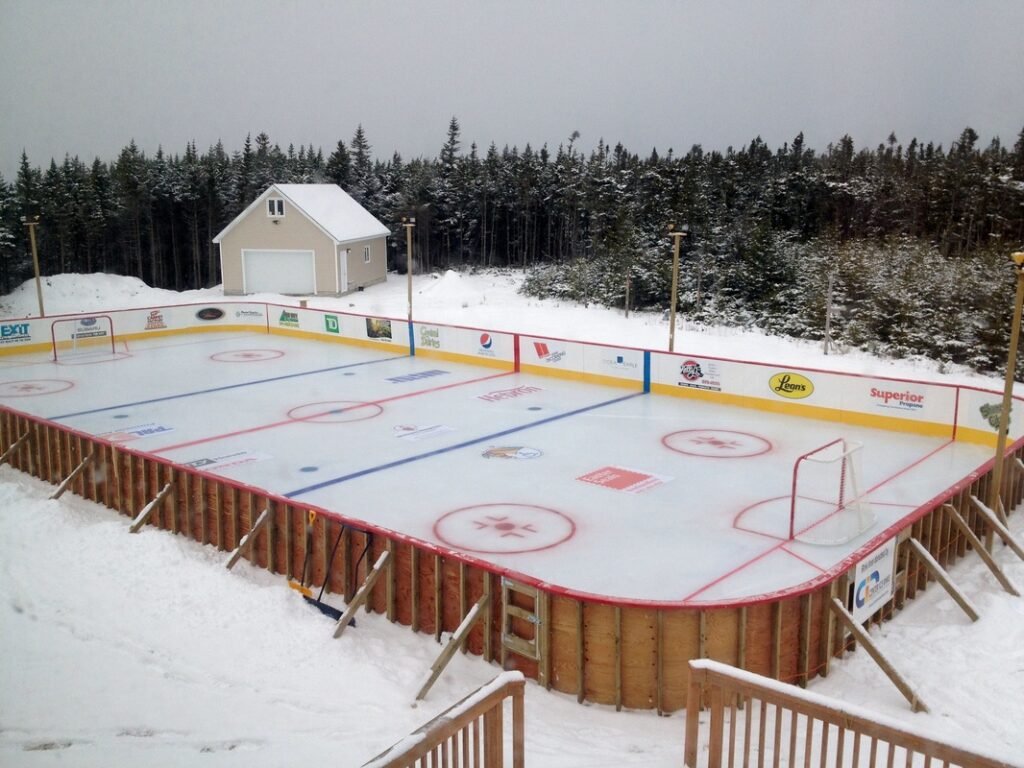
You can bring hockey home with a backyard rink or a dedicated street hockey court. A permanent synthetic surface or sport tile rink lets kids play all year, while a winter ice rink kit works in colder states. Either way, the goal is a safe, level surface with proper boards and lighting.
One of the greatest sports pass times on record is street hockey, which serves multiple benefits in the local community. The inclusiveness of the sport alone caters to athletes and non-athletes alike, as holding a stick and hitting a ball doesn’t require you to be a certain height or speed. Typically in a neighborhood, everyone is welcome, an ideology that transfers over to the ice, league play and the professional level as well. That’s right, there’s a lot of equipment to haul around, but everyone is on a similar field, and there’s never anything wrong with young people carrying their own gear for the sake of playing the game. There’s something about the scuffling of feet on the road, the clacking of sticks against each other, and occasional call out of “CAR” when it’s time for a brief pause to let the local traffic mosey on through.
But what if you can transition all of that positive energy that pick-up hockey on the street brings to the ice and what if you could do it yourself, do it affordably and do it in your own backyard? With increasing demand for rink time in the northern states and Canada and a low supply available during the prime season, building your own hockey rink in your backyard has never made more sense. It’s such a drag to bring money and cost benefits into almost everything we do as humans, but ice-time at a public rink isn’t cheap, and if your hockey loving kids embrace playing and practicing in your own backyard you could potentially be saving.
Regardless of skill, a hockey player who can’t skate almost ceases to become a player, and the common denominator of all players who play at a high level is that they are good skaters. The challenge however, is developing that skill affordably once you factor in paying for ice time, travel to and from the rink and your time spent going back and forth.
Now building a rink with sites like Pinterest, and Yahoo groups (is a reference to Yahoo a cool and hip reference? ) dedicated to the community of backyard ice rink enthusiasts is easier than ever, and the benefits are countless. The cost issue could create some savings, as rinks depending on what you want and the space you have could range from $300 to $8000. It’s difficult to quantify the convenience, but you don’t need anyone telling you that walking a few steps to work on your game for an hour or just skating is much easier (and cheaper) than driving to the rink. What’s better than a family project that leads to an annual family tradition??? You’ll be a rich person if you can identify something that’s better than that.
Finally, there’s something to be said for the community aspect a backyard hockey rink would develop. As a parent, is it not better to have the action at your place, if it makes sense to do so? Young people and adults alike will flock to your spot making engagement so much easier for you. If your family loves hockey, and you haven’t already, huddle up with family and see if bringing hockey to your own backyard makes sense for you.
What a backyard hockey setup needs
- A level base. Compacted stone or an existing slab so the surface stays flat and drains.
- A playing surface. Sport tiles for inline and ball hockey, synthetic ice for skating, or a seasonal flooded rink.
- Boards or rebounders. Even low boards keep the puck in play and save your siding.
- Nets and containment. A regulation or junior net plus backstop netting behind each goal.
- Lighting. Hockey season is dark by 5 pm. Two well placed fixtures double the usable hours.
Common questions about backyard hockey
How much space does a backyard hockey rink need?
A practical family rink starts around 20 by 40 feet, which is enough for two on two and shooting drills. Most of the rinks we build for hockey families run 30 by 60 feet. A full size NHL rink is 85 by 200 feet, which is far more than any backyard needs.
Can hockey be played on sport court tiles?
Yes. Interlocking sport tiles are the standard surface for inline and ball hockey. They give a fast, consistent puck glide, absorb falls better than asphalt, and drain through the seams, so the rink is playable an hour after rain. Add boards and lines and it doubles as a basketball court.
What surface works for hockey in a warm climate?
Synthetic ice panels let kids skate with real blades in Texas heat, with no refrigeration. For families who want stick and ball play without skates, a tile court is cheaper and lasts longer. We build both in Austin and Houston and can walk you through which fits your yard.