
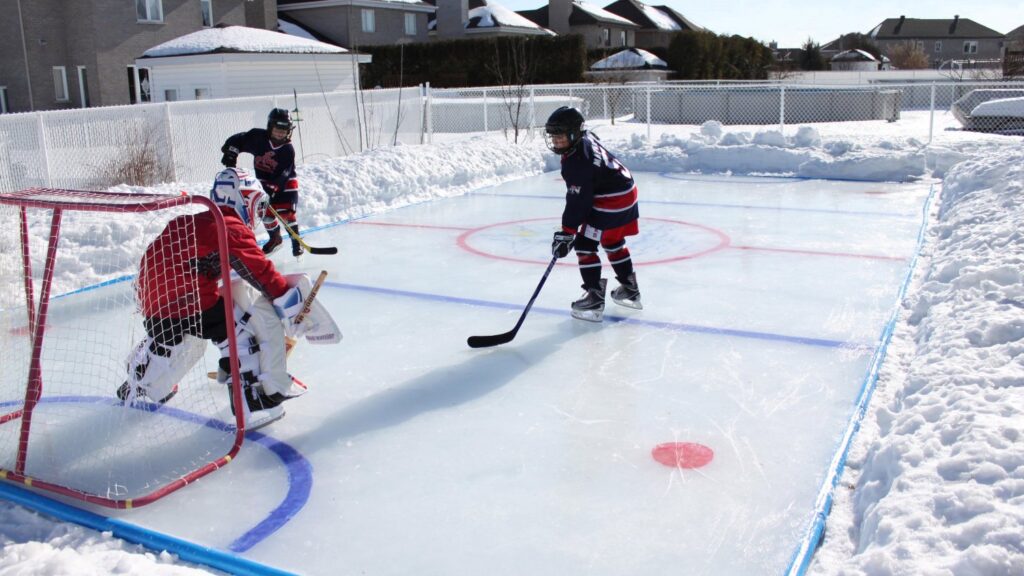
Here is how to build a backyard ice rink in five steps. Pick a flat, shaded spot near a water source and frame it with 2×10 or 2×12 boards. Line it with white polyethylene that hangs at least a foot over the boards. Fill it slowly, then skate only once the ice is at least 3 inches thick.
Key Takeaways
- Water freezes flat, so every inch the ground drops adds an inch of water and board height at the low end.
- A level 30 by 60 foot rink takes about 3,400 to 4,500 gallons, and at 4 inches deep that water weighs over 18 tons.
- Shovel after every snowfall and flood in thin layers at night or early in the morning.
- Toronto’s rink guide wants 25°F or colder for five days straight, and Central Park’s average January low is 27.9°F, so near New York City natural ice depends on cold snaps.
Is It Cold Enough for a Natural Backyard Ice Rink?
Before you learn how to build a backyard ice rink, check your winters. The City of Toronto’s natural ice rink guide wants frozen ground and air at 25°F or colder for at least five days in a row. Compare that with the National Weather Service Central Park climate normals.
| Month | Average high | Average low |
|---|---|---|
| December | 44.3°F | 33.8°F |
| January | 39.5°F | 27.9°F |
| February | 42.2°F | 29.5°F |
Even the average January low sits above 25°F. A natural rink can still work in New Jersey, New York and Connecticut, but you flood during cold snaps and plan around thaws. For warmer yards, compare synthetic ice and dek hockey in our guide to backyard hockey rink options.
How to Build a Backyard Ice Rink, Step by Step
1. Pick the Flattest, Shadiest Spot
Choose flat, level ground close to your water source. Shade helps, since the Ontario Minor Hockey Association notes that shadier areas stay frozen longer.
Outdoor pipes may be frozen or drained for winter, so Sonnet Insurance suggests running the hose from an indoor tap such as a laundry sink. Keep the rink clear of the house and your neighbor’s yard, where spring meltwater could flood.
2. Measure the Slope
Stretch a string between stakes and check it with a line level. The steeper the yard, the taller the boards must be at the low end to hold the water.
The deep end holds your minimum depth plus the full drop. A yard that falls 6 inches, with 3 inches of water at the high side, needs about 9 inches at the low side and taller boards to match.
3. Set the Boards and Brackets
This Old House frames its rinks with 2×10 or 2×12 lumber, galvanized brackets and screws, and concrete form stakes. Pack sand into any gaps under the boards.
Water weighs about 62.4 pounds per cubic foot, per the USGS, so a 30 by 60 foot rink filled 4 inches deep holds roughly 37,000 pounds of water.
4. Lay the Liner Once the Grass Is Dormant
Use white polyethylene sheeting. A thick liner lowers the chance of leaks, and white reflects the sun that dark plastic would absorb.
Size it to cover the floor, climb the boards and still hang at least 1 foot over every side, as This Old House’s rink build recommends. With 12 inch boards, a 30 by 50 frame takes at least a 34 by 54 liner. Staple the overhang to the outside of the frame, never the part that holds water.
Put it down at the start of winter, right after the grass goes dormant. This Old House’s carpenter times it that way so the lawn is not ruined.
5. Flood and Wait
Fill the rink in one session so the water levels itself, as the Ontario Minor Hockey Association advises, until the shallowest spot holds enough water for 3 inches of ice. A garden hose can take 8 hours or more, and the water then needs at least two days to freeze solid.
Skate only on 3 inches of ice or more, the thickness Toronto’s guide says holds an average adult without cracking.
Tip: When you finish, shut off the tap, open the nozzle to drain the hose and roll it up indoors. Toronto’s flooding instructions warn that a frozen hose can take hours to thaw.
Backyard Ice Rink Size Chart: Liner, Boards and Water
Liner sizes assume 12 inch boards plus a 1 foot overhang on every side, board run is the perimeter, and water assumes a level site. Gallons use NIST factors (7.48 per cubic foot).
| Rink size | Minimum liner | Board run | Water at 3 to 4 in |
|---|---|---|---|
| 20 by 40 ft | 24 by 44 ft | 120 ft | 1,500 to 2,000 gal |
| 25 by 50 ft | 29 by 54 ft | 150 ft | 2,300 to 3,100 gal |
| 30 by 60 ft | 34 by 64 ft | 180 ft | 3,400 to 4,500 gal |
| 40 by 80 ft | 44 by 84 ft | 240 ft | 6,000 to 8,000 gal |
Slope raises those numbers fast. On a 30 by 60 rink, each added inch of average depth means about 1,100 more gallons. Mind the upkeep: Halifax’s community rink guide calls 40 by 50 feet a good start, since a big sheet wears out the people who flood it.
How to Keep Backyard Rink Ice Smooth
- Clear snow fast. Shovel after every snowfall with a plastic push shovel. Snow left on the rink can melt into bumps.
- Flood in thin layers. Work at night or early morning. If a coat takes over 15 to 20 minutes to freeze, Toronto’s guide says you used too much water. Skip nights of minus 9°F or colder, when the warmer water cracks the ice.
- Use hot water if you can. The Ontario Minor Hockey Association recommends hot water for the floods that follow the first fill.
- Patch cracks with slush. Pack a mix of water and snow into chips and cracks, smooth it, let it freeze, then flood over the repair.
Tip: Keep the hose moving. Halifax’s rink guide warns that water blasting from a hose with no nozzle can cut an inch into the ice in two minutes.
Spring Teardown Without Wrecking the Lawn
- Take it down on time. Toronto’s guide warns that a rink left up through above-freezing weather becomes a tripping and drowning hazard and badly damages grass.
- Break up the ice. Toronto notes that breaking up the sheet can speed the melt.
- Send the water away from buildings. Pull the boards so meltwater runs off evenly, away from your house and your neighbor’s yard.
- Dry the liner before you store it. Hang it until it is fully dry, then fold it, which keeps mold from forming.
- Store the frame and fix the lawn. Keep lumber and hardware somewhere dry, then aerate and lightly reseed any thin patches.
Refrigerated Backyard Rinks: How Chillers Work and What They Cost
A refrigerated backyard rink swaps the forecast for a machine. As the Refrigeration School explains, the refrigerant does not cool the ice directly. It chills brine, an antifreeze solution pumped through pipes under the ice, and the ideal arena skating surface is 24 to 26°F.
| Option | Typical cost |
|---|---|
| DIY rink with boards and liner | $200 to $1,800 |
| Ice rink kit | $2,000 to $8,000 |
| Professionally installed backyard rink | $3,000 to $34,000 or more |
| Refrigeration machine for an indoor rink | $3,000 to $70,000 |
According to HomeGuide’s ice rink cost guide, refrigeration options sit at the pricier end of backyard builds. Plan for a licensed electrician too, at $50 to $130 an hour by HomeGuide’s figures.
When Refrigeration Makes Sense
- Your winters hover near freezing, as they do around New York City.
- You want a steadier season. Refrigeration cools the ice from below, so skating depends less on the forecast.
- Your skaters need more ice. Limited, costly ice time is one of youth hockey’s biggest challenges.
A Permanent Rink Pad Fixes the Slope Problem
A seasonal rink brings back slope, soft ground and spring lawn repair every winter. A graded, compacted pad ends all three. See our residential court builds and how our sport court construction process works.
Frequently Asked Questions About Building a Backyard Ice Rink
How long does a backyard ice rink take to freeze?
This Old House gives a freshly filled rink at least two days to freeze solid, and longer in milder weather. Then check for at least 3 inches of ice, the minimum Toronto’s rink guide sets for holding an average adult. On a sloped yard, test the deep end.
Will a backyard ice rink kill the grass?
It can if the rink stays up too long. Toronto’s rink guide says rinks left in place through above-freezing weather cause extensive damage to grass. This Old House advises building right after the lawn goes dormant and removing everything before spring. If patches look thin afterward, aerate the lawn and lightly reseed the damaged areas.
How much does a backyard rink chiller cost?
HomeGuide does not price backyard chillers on their own. It puts professionally installed backyard rinks at $3,000 to $34,000 or more, with refrigeration options costing more, and lists refrigeration machines for indoor rinks at $3,000 to $70,000. Add electrician time and the power to run the system all season.
Can you build a backyard ice rink on a slope?
Yes, within limits. Toronto’s rink guide calls a sloped area a poor site and says the steeper the slope, the taller the borders must be at the low spot. This Old House fills gaps under the boards with sand and notes that low-end ice can reach the top of a 2×12, leaving no lip to stop pucks. A graded permanent pad is the long-term fix.
Want a Rink That Starts Level Every Winter?
My Backyard Sports designs and builds ice and multi-sport hockey rinks, and our own crews handle the base work. Tell us about your yard, and we will measure the space and recommend a layout.