
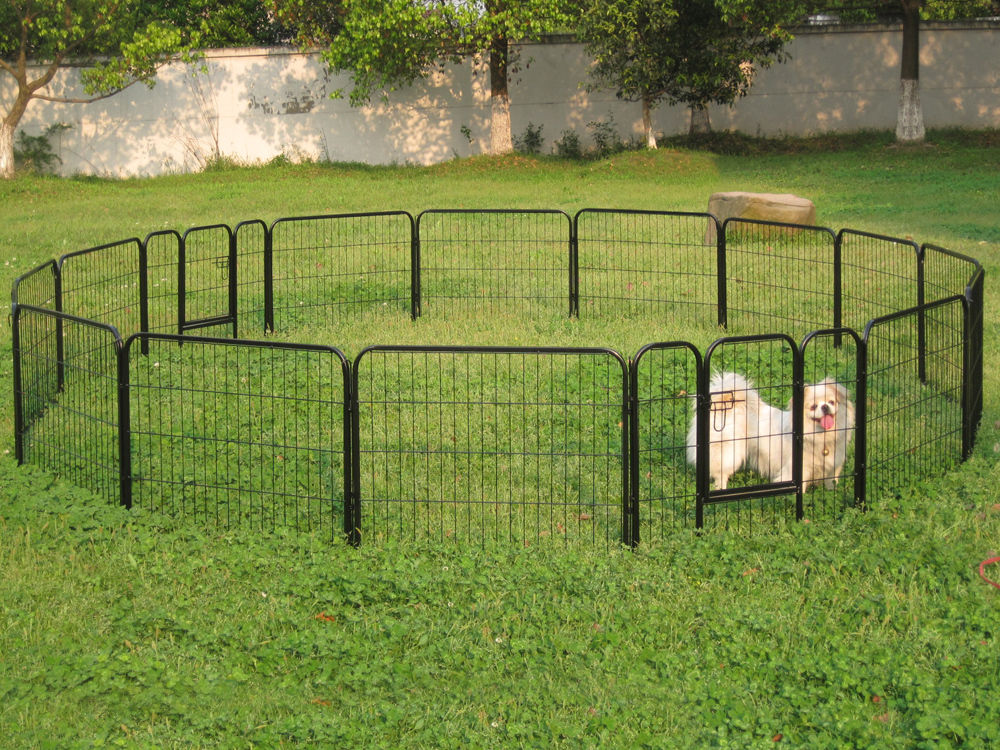
The best backyard fence for dogs is the one that blocks your dog’s favorite escape route. For most families that means a solid wood or vinyl privacy fence at least 4 feet tall, or 5 feet and up for big dogs and jumpers, with a buried barrier for diggers. Chain link saves money, and aluminum keeps the view open but needs tight pickets for small dogs.
Key Takeaways
- Fence maker Jerith recommends 48 inches as a minimum and 60 inches or taller for larger dogs, especially jumpers.
- Smooth, solid panels are hard to climb. Chain link gives climbers a foothold.
- Stop diggers by burying the fence bottom 1 to 2 feet or adding a wire apron along the base.
- Electronic fences can shock a dog coming home and cannot keep other animals out.
- Plan the backyard fence, the gates and any sport court as one layout so posts and netting land in the right spots.
What Makes the Best Backyard Fence for Dogs?
Dogs leave a yard three ways: over the top, under the bottom or through a gap. A pet friendly backyard fence closes all three, and the gate counts as part of the fence.
- Over. Jumpers clear the top. Climbers scale chain link or use anything parked near the fence as a step.
- Under. Diggers tunnel below the bottom rail or panel.
- Through. Puppies and small dogs slip between pickets, under gates or past a loose board.
Watch how your dog tests the fence before you choose materials. Motive matters too: Humane World for Animals names boredom and isolation, fear of loud noises and the urge to find a mate as common reasons dogs escape.
Types of Backyard Fences for Dogs Compared
The pros and cons below draw on the American Kennel Club’s guide to dog fence types, with notes from fence makers and animal welfare groups.
| Fence type | Best for | Weak spot |
|---|---|---|
| Wood privacy | Climbers, barkers, privacy | Rot, warping, loose boards; yearly sealing |
| Vinyl privacy | Climbers, low upkeep | Costs more than metal; glare in sun |
| Chain link | Tight budgets, big yards | No privacy; climbers can scale it |
| Aluminum or iron | Open views, calm dogs | Small dogs fit between standard pickets |
| Welded wire mesh | Dig aprons, tall enclosures | Cut wire ends can scratch |
| Picket | Small, calm dogs | Too short and open for big dogs |
| Block base, metal top | Diggers and jumpers | Expensive to build |
| Electronic or invisible | Not a physical barrier | Shocks dogs coming home; lets others in |
Wood Privacy Fence
Wood is affordable, easy to customize and blocks sight and sound, which helps a dog that runs the fence line. It needs yearly sealing or paint and can warp or rot in wet weather.
Posts sit in soil, so buy treated lumber rated Ground Contact (UC4A). The Southern Forest Products Association calls Above Ground lumber in wet or near-soil spots a common mistake.
Vinyl Fence
Vinyl will not rot, fade or chip, and its smooth face is hard for a dog to climb. It costs more than metal, and bright white panels can glare in full sun.
Chain Link Fence
Chain link is durable, weather resistant and low maintenance, which makes it the budget choice. It offers no privacy, and a determined climber can scale the diamonds.
Buy it to spec. The Chain Link Fence Manufacturers Institute recommends mesh no larger than 2 1/8 inches on fences 3 to 5 feet tall and no larger than 2 inches at 6 feet and up. Ask for fabric knuckled at the top and bottom so no sharp wire ends face your dog.
Aluminum and Ornamental Metal
Metal pickets look open and tidy, but standard spacing lets small dogs squeeze through. On Jerith’s Legacy style, standard pickets sit 3 13/16 inches apart and the reduced version sits 1 5/8 inches apart.
An open fence also shows a high prey drive dog everything it wants to chase, and wrought iron needs repainting over time.
Welded Wire and Picket Fences
Welded wire and hardware cloth are go-to dog fence ideas for patching an existing fence, especially as a dig apron. For extra tall fencing, Best Friends Animal Society recommends coated wire mesh over chain link because it is stronger.
A classic picket fence suits a small, calm dog but is too short and open for large dogs or practiced escape artists.
Are Invisible and Electric Dog Fences a Good Idea?
An invisible fence pairs a buried wire or wireless signal with a collar that shocks the dog near the boundary. Humane World for Animals advises against shock collars and points out the catch: a dog that runs through the line gets shocked again coming back, so it may not come home.
The collar controls only the dog wearing it, so strays, wildlife and people walk right in. For a yard with kids, a pool or a court, the best backyard fence for dogs is a physical one, with a GPS collar as backup.
How Tall Should a Dog Fence Be?
Start at 4 feet and go up with your dog’s size and jumping record. Jerith’s pet fence guide recommends 48 inches as a minimum and 60 inches or taller for larger dogs, especially jumpers.
Six feet is also a legal line in New Jersey: the state construction code needs no permit for fences 6 feet or less, except pool barriers. Town zoning can still limit height and placement, as our backyard sport court permit guide explains.
| Your dog | Fence height | Add if needed |
|---|---|---|
| Small or calm | 48 inches minimum | Tight pickets or mesh down low |
| Large | 60 inches or taller | Dig barrier along the base |
| Jumper or climber | 60 inches up to 6 feet | Inward tilted top or coyote rollers |
| Digger, any size | Match the size row | Buried bottom 1 to 2 feet or wire apron |
Height alone will not stop a climber. Humane World for Animals suggests an extension that tilts inward at about 45 degrees, and the tilt matters more than the extra height.
Easy Fencing Solutions for Diggers, Climbers and Squeezers
Before you replace a backyard fence, try the fix that matches the escape route.
For Diggers
- Bury the bottom. Set the fence bottom, metal strips, concrete or large rocks 1 to 2 feet below the surface.
- Add an L-footer. Attach chicken wire, hardware cloth or chain link to the base, lay it flat facing into the yard and pin it with rocks or mulch. Roll the cut edges so they cannot scratch your dog.
- Offer a dig zone. A sandbox with buried toys gives a digger a legal place to dig.
For Climbers and Jumpers
- Coyote rollers. Bars along the top spin when a dog reaches for a grip.
- Inward tilt. An angled top works like an awning over the yard.
- Clear the launch pads. Move wood piles, trash cans, tables and play equipment away from the fence.
For Squeezers and Fence Fighters
- Close the gaps. Add reduced-spacing panels or removable mesh while a puppy grows.
- Check the line. Walk the fence often for holes, and keep an escaper on a leash until they are fixed.
- Block the view. Slats in chain link, or bamboo or reed rolls tied on with zip ties, hide the passersby a territorial dog wants to chase off.
Tip: Call 811 before you dig a single post hole. The national 811 program says fence projects require the call, and utilities generally get a few days to mark their lines with paint or flags.
Gates and Sport Courts: Planning the Whole Yard
A gate left open undoes the best backyard fence. The AKC suggests a double gate, or airlock entry, so a dog cannot slip past you. Add a lock or hook-and-eye closure to any gate that blows open.
Planning a court? Draw the fence around it, not through it. USA Pickleball’s 2026 rulebook puts its 20 by 44 foot court on a playing surface of at least 30 by 60 feet. It recommends 34 by 64 feet for new construction and lists fencing as a permanent object.
Court fencing or ball stop netting taller than 6 feet is not covered by New Jersey’s fence exemption, so ask your town about a permit first. To keep the yard open between games, compare portable and permanent sports nets.
When we plan residential sport courts, we measure the space and recommend a layout. Mark your fence, gates and dog run so the court, hoop and lines fit around them, then see how our sports construction crews handle everything from base work to line painting.
Frequently Asked Questions About Dog Fencing
What is the best fence for a dog that digs?
Any sturdy fence works once the bottom is secured. Bury the fence bottom 1 to 2 feet, or attach an L-shaped apron of chicken wire, hardware cloth or chain link that lies flat along the ground facing into the yard. A block or concrete base is the toughest fix.
What is the cheapest dog fence that actually works?
Chain link is the classic low-cost choice, and the AKC rates it durable, weather resistant and low maintenance. Choose mesh no larger than 2 inches if you go 6 feet tall, ask for knuckled edges, and add slats if your dog barks at passersby. Do not treat an electronic system as a cheap substitute, since it does not keep other animals out.
Do you need a permit to put up a dog fence?
In New Jersey, the state construction code does not require a permit for a fence 6 feet tall or less. The exemption excludes pool barriers, and your town’s zoning code or HOA can still limit height, style and placement. Check locally before you order, and call 811 so utilities get marked before anyone digs.
Planning a Court in a Yard Your Dog Shares?
My Backyard Sports designs and builds custom backyard courts for basketball, pickleball, tennis and more. Tell us where your fence and gates are, and we will lay out a court that works for the whole family, dog included.