
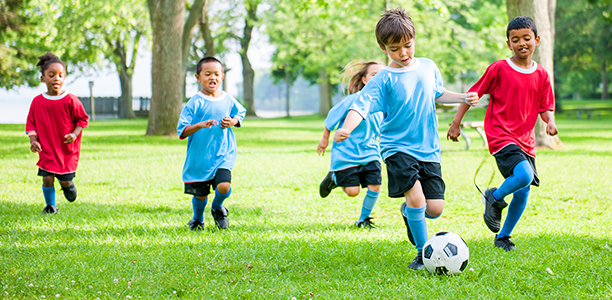
Why kids should play outside comes down to five reasons backed by research. Outdoor sports help children reach the CDC’s goal of 60 active minutes a day, and time in natural light lowers their risk of nearsightedness. Active play supports mood, daylight and exercise help set the body clock for sleep, and team games build social skills that screens cannot teach.
Key Takeaways
- Kids ages 6 to 17 need 60 minutes or more of moderate to vigorous activity every day. Soccer, basketball and tennis all count.
- In a three-year trial in China, 30.4% of kids at schools that added a daily 40-minute outdoor class became nearsighted, against 39.5% at schools that did not.
- In 2021, tweens averaged about five and a half hours of entertainment screen time a day, and teens about eight and a half.
- Pediatricians say play with parents and peers builds self-control, social skills and a healthier stress response.
- A hoop, net or court in view of the back door makes outdoor play the easy choice.
Reason 1: Outdoor Sports Cover the 60 Active Minutes Kids Need
The CDC activity guideline for children says ages 6 to 17 need 60 minutes or more of moderate to vigorous activity each day, with harder, heart-pounding play on at least 3 days a week.
Most teens fall short. According to the 2018 federal Physical Activity Guidelines for Americans, only about 20% of U.S. adolescents report enough activity to meet both the aerobic and muscle-strengthening targets. Worldwide, the World Health Organization counts 81% of adolescents aged 11 to 17 as not active enough.
Sports are a fun way to close that gap. The same federal guidelines tie regular activity in childhood to stronger bones, healthier weight and better heart and muscle fitness. That matters when about 1 in 5 U.S. children and teens has obesity, according to the CDC.
| Activity type | How often | Outdoor examples from the federal guidelines |
|---|---|---|
| Aerobic, moderate or vigorous | Most of the daily 60 minutes | Bike riding, hiking, running, games of catch, baseball and softball |
| Aerobic, vigorous | At least 3 days a week | Soccer, basketball, tennis, tag, flag football |
| Muscle strengthening | At least 3 days a week | Climbing playground equipment, rope or tree climbing, tug of war |
| Bone strengthening | At least 3 days a week | Running, jumping rope, hopscotch, basketball, tennis |
Basketball and tennis show up twice. One pickup game can count as vigorous aerobic work and bone-strengthening impact at the same time.
Reason 2: Daylight Helps Protect Growing Eyes
Nearsightedness, or myopia, has been rising for decades. The American Academy of Ophthalmology cites an estimate that nearly half the world’s people will be nearsighted by 2050. It also says more time outdoors in natural light reduces a child’s risk.
Strong evidence comes from a randomized trial published in JAMA. Twelve schools in Guangzhou, China, enrolled about 1,900 first graders around age 6. Half the schools added one 40-minute outdoor class to every school day and urged parents to get kids outside after school.
After three years, 30.4% of eligible children in the outdoor schools had become nearsighted. In the schools that kept their usual routine, the figure was 39.5%.
Sunlight helps bones, too. Your body forms vitamin D after sun exposure, and vitamin D helps it absorb calcium, a main building block of bone, according to MedlinePlus from the National Library of Medicine.
Sun safety tip: The CDC advises broad-spectrum sunscreen of SPF 15 or higher, put on again after 2 hours in the sun and after swimming or sweating. Add a hat with a brim all the way around, plus shade breaks. UV rays are strongest from 10 a.m. to 4 p.m. during daylight saving time.
Reason 3: Active Play Supports Mood and Eases Stress
Movement helps the mind, not just the body. The federal activity guidelines list better thinking skills and a reduced risk of depression in children ages 6 to 13 among the benefits of regular activity backed by strong or moderate evidence.
Growing up near green space may matter as well. A Danish study in PNAS tracked about 1 million people from birth. Those who grew up with the least green space around home had up to 55% higher risk of later psychiatric disorders than those with the most. That is an association, not proof of cause.
Pediatricians add a family angle. Shared, playful back and forth between parents and children helps regulate the body’s stress response. A few free throws together after a rough day is time well spent, and parents gain from it too, as we cover in these lessons parents learn playing sports with their kids at home.
Reason 4: Daylight and Exercise Help Set the Body Clock for Sleep
Light and dark have the biggest influence on the body clock, according to the National Institute of General Medical Sciences. Physical activity affects it too. The brain controls its release of melatonin, a hormone that brings on sleepiness, based on the light the eyes receive. Light from electronic devices at night can confuse that clock.
The CDC’s sleep tips include exercising regularly and turning off devices at least 30 minutes before bed. Outdoor sports cover the first tip, and every hour on the court is an hour away from a screen.
| Age | Recommended sleep |
|---|---|
| 3 to 5 years | 10 to 13 hours, including naps |
| 6 to 12 years | 9 to 12 hours |
| 13 to 17 years | 8 to 10 hours |
Reason 5: Team Games Teach Social Skills Screens Cannot
A 2018 clinical report from the American Academy of Pediatrics on the power of play calls play with parents and peers a unique way to grow social, emotional, thinking, language and self-regulation skills. Those skills feed executive function, the mental toolkit kids use to chase goals and tune out distractions.
A pickup game makes those lessons real. Kids pick teams, agree on rules, take turns, settle a disputed line call and shake off a loss before the next round. Online games can be social, but they rarely demand the same face-to-face give and take.
If your kids love fast games with a crowd, read our guide on why a gaga court suits a busy backyard.
Video Games vs Playing Outside: Where the Hours Go
Screens are a big rival for outdoor time. The Common Sense census of media use found that in 2021, tweens aged 8 to 12 averaged about five and a half hours of entertainment screen media a day. Teens aged 13 to 18 averaged about eight and a half hours.
That total covers TV, online video, gaming and social media, and it grew 17% from 2019 to 2021. Not every screen is idle, though. The federal guidelines even list some video games that include continuous movement as moderate activity for teens. What a screen cannot supply is daylight, open space and a real opponent across the net.
How to Make Outdoor Play the Easy Choice
Knowing why kids should play outside is half the job. Making it easy is the other half.
- Keep gear by the door. A ball, a racquet or a jump rope in reach competes well with a console that is already on.
- Put play on the calendar. Set an outdoor hour after school, before screens come out.
- Join the first few games. Your presence gets it started. Then let the kids run it.
- Invite friends over. A friend at the door is hard to say no to.
- Give them a real place to play. A hoop or a court turns “go outside” into “go shoot around.”
For the case for a court at home, see these advantages children get from playing sports in their own backyard. Our crews build residential sport courts for basketball, pickleball, tennis and multi-sport play, sized to the yard you have.
Frequently Asked Questions About Why Kids Should Play Outside
How long should kids play outside each day?
The CDC target is about activity, not location: 60 minutes or more of moderate to vigorous activity every day for ages 6 to 17. Outdoor sports are one of the easiest ways to reach it. For eyesight, the Guangzhou school trial saw fewer new cases of nearsightedness after adding 40 minutes outside per school day. An hour of active outdoor play daily meets the CDC target and tops the trial’s 40 minutes.
Is playing outside better than playing video games?
For health, usually yes. Outdoor sports add running, jumping and daylight, which help fitness, bones and eyes, plus face-to-face teamwork. The federal guidelines do count some video games with continuous movement as moderate activity for teens, so gaming is not all bad. The problem is volume. Tweens already average about five and a half hours of entertainment screens a day, leaving little room for active play.
What are the best outdoor sports for kids?
The best sport is the one your child keeps playing. For health value, choose games with running and jumping. The federal activity guidelines name soccer, basketball and tennis as vigorous activity, and list basketball and tennis as bone strengthening as well. Running games such as tag and flag football also count as vigorous. Racquet games such as pickleball give parents and kids a game to share.
Can kids play outside in hot or cold weather?
Yes, with some planning. On hot days, the CDC advises outdoor activity during the coolest parts of the day, time in the shade, breaks and plenty of water. Use sunscreen, especially from 10 a.m. to 4 p.m. when UV is strongest. In cold weather, dress kids in several layers with a hat and gloves or mittens. Check that the court is dry and free of ice before anyone runs.
Give Your Kids a Reason to Head Outside
A court in the backyard makes the CDC’s 60 active minutes a day easier to reach. My Backyard Sports designs and builds residential courts in New Jersey, New York, Connecticut, Austin and Houston, and we start by measuring your space and recommending a layout.